
Microneedling: The Treatment Everyone’s Talking About and Almost No One Fully Understands

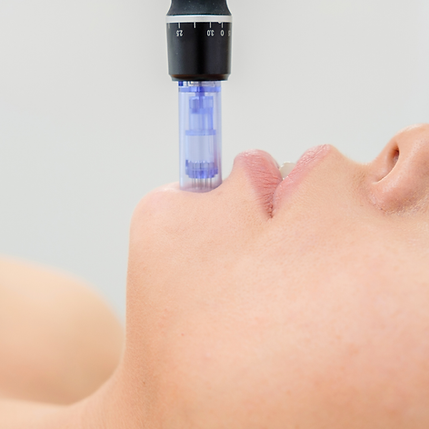
Microneedling is the quiet luxury of skin treatments. No gimmicks, no instant filter effect. Just your skin — doing what it was always designed to do: repair, rebuild, and come back better.
And honestly, there’s something kind of iconic about that.
Microneedling is recommended in med spas, dermatology offices, and group chats consistently. It shows up in before-and-afters that feel almost suspiciously good. And yet, for something so widely accepted, there’s still a lingering sense that people are just... trusting the process and hoping for the best. Which, to be fair, isn’t the worst strategy — but it’s also not the best.
Why This Treatment Never Goes Out of Style
Microneedling doesn't rely on trends and it doesn't need a rebrand every six months to stay relevant. It works because it taps into something much less exciting, but far more reliable: your skin’s natural ability to repair itself.
Controlled micro-injuries trigger a healing response. Collagen production increases. Skin becomes smoother, firmer and more even. Not overnight, but in a way that actually lasts.
From a treatment room perspective, this is why it's such a staple.
It’s not flashy. It’s foundational.
So, Is Everyone Really a Candidate?
Microneedling gets labeled as “for everyone,” which is both true and slightly misleading.
Most skin types can benefit from it — whether the concern is acne scarring, fine lines, enlarged pores, or texture that doesn't seem to respond to anything else.
But here’s where things go sideways: People hear “universal” and assume “uniform.” Same depth, same treatment, same approach.
In reality, the effectiveness of microneedling has very little to do with doing it - and everything to do with how it’s done. Customization isn’t just a bonus here — it’s the whole point.
Short Term Goal vs. Long Term Flex
There’s always a moment, a few days post-treatment, where the skin looks smoother, fresher — like everything is settling more smoothly. That’s the part people fall in love with. But the visible glow? That’s just the opening act.
What’s actually happening underneath the surface is slower and significantly more important. Collagen and elastin increase over time, improving the structure and resilience of the skin in a way no topical product can replicate.
It’s the difference between looking better temporarily and aging better intentionally.
How Often is Enough?
Microneedling works best as a series — not because you're being upsold, but because your skin builds on each treatment.
For Corrective Goals:
A series of 3-6 treatments, 4 weeks apart.
For Maintenance:
Every 6–8 weeks, depending on skin goals, collagen support needs, and overall skin health.
The Homecare Piece People Underestimate
This is the part that rarely gets the same attention but arguably matters just as much. What happens at home directly influences the outcome of in-spa treatments.
Post-treatment care isn't about adding more, it's about protecting the process:
Barrier support
Sun protection
Minimizing unnecessary irritation
Avoiding ingredient overload during healing
Because the skin is in a highly responsive state, not an immune one.
How it’s treated afterward determines how well it rebuilds. Post-treatment skin is more receptive, more absorbent, and slightly more vulnerable. Which means what you do next either supports the process or works against it.
Nothing compromises a good in-spa investment faster than inconsistent or overly aggressive home care.
The Takeway
Microneedling isn't just a glow shortcut. It’s a structured process of controlled repair.
Like the most effective treatments in aesthetics, its success depends less on the procedure itself and more on how well it’s matched, timed and supported.
In a world full of instant gratification, the best results will belong to the ones willing to play the long game.
Kelly Skierski
Medical Aesthetician
Pore Decision Maker



Comments